Troutbirder

Troutbirder
To Go To Troutbirders Nature Blog (click on above picture)

Sunday, September 16, 2012

Football

The Sweet Season is by Austin Murphy who
has for years has covered major college football and the NFL. After fifteen years of traveling about half of
the year, while contending with the antics
of the spoiled major-level athletes of today (both
professionals and so-called amateurs), in 1999
Murphy took a leave of absence in order to temporarily move
with his family to Minnesota while
he wrote a book. The project he had in mind was to spend a
full season covering the 1999 campaign of the St. John's University team which plays Division III football under the guidance of legendary Coach John Gagliardi. Gagliardi
was probably the initial focus of the book as he closed in on the all-time
record for coaching wins, but almost immediately Murphy and
his family were instead captivated and rejuvenated by the alluring and low-key life of small college America, along with
many of the personalities around the school and its top-flight football team. For each week of the season the author beguiles us with
stories of on-campus events leading up to the game and the gradual growing together of his family under the charms of the rural town
and its school. This is a good book about small college football
that goes well beyond the action on the field. It at once creates a nostalgia and an appreciation for a collegiate world that is about more
than some of the conduct that now has become the norm in the
land of Division I. Think of the recent disaster at Penn State where misplaced college pride and egos allowed a sexual
predator on the coaching staff free to roam among his victims. Add that to the criminal behavior common among the so-called heroes of the NFL. A sad mess indeed. That mess is mostly about money. Because of that educational and personal integrity are no longer a critical consideration of major school and certainly not for the pros. Unbeknownst to many college football fans are players, teams, and coaches who play for the love of the sport. Division III NCAA football represents programs where athletic scholarships are forbidden. Athletes in Division III programs may be a step slower or a little smaller than their counterparts who receive scholarships, but they have an equal love for the game. THE SWEET SEASON is a wonderful story about young and old men sharing a love of sport and a love of life. Perhaps more important, it is a story of personal rejuvenation and rebirth for the author. Gagliardi wins with methods that would leave
football fans and coaches befuddled. His philosophy includes a list of 74
"NOs," including: no whistles, no playbooks, no hitting during the
week, and no cuts from the squad. He disdains calisthenics and serious physical drills. Plays are diagrammed on note cards. They do not tackle or cut block one another in practice. No matter how
talented the coach, he still must have quality athletes to win. Murphy
acknowledges that he came to this project with preconceived notions about the level of athletic skill in Division III. "I didn't think they'd suck, but I didn't know they'd be this quick, talented, or tough," he writes. Don't let the Roman numeral throw you, there's quality football in Division III. But the roster is filled with men who are more than football players. This book is more about the Olympic ideal of amateur sport which may have been lost as well. The love of the sport is the
driving motive. How refreshing…..

Thursday, September 6, 2012

Wolf Hall

Wolf Hall by Hilary Mantel is the story of Henry VIII and Anne Boleyn as told by Thomas Cromwell. It tells of a time of turmoil in England history on the interface of religion and politics. The authors characterizations are crisp and fascinating.
The dialogue is often riveting and unfortunately confusing at times. Line after line end with a comma and the words, “he said.” Who said the reader might ask of a cast of character list that is
pages long? Perhaps in my dotage I’ve a tendency towards confusion but this is a little too much….

Monday, September 3, 2012

The Three R's

The three R's. Rommney, Ryan & Rand.
There's something seriously disturbing about millions of tea partyiers who froth at the mouth at the idea of providing health care to the tens of millions of Americans who don't have it. Or who take
pleasure at the thought of privatizing and slashing bedrock social programs like Social Security or Medicare. As our country quickly drifts into an increasing divided society with the middle class being squeezed out of existence it is the right-wing moneyed elites who more and more openly
share their distaste for the working poor. Where do they find their
philosophical justification for this kind of attitude?
It turns out, you can trace much of this thinking back to
Ayn Rand, a popular cult-philosopher who exerts a huge influence over much of the right-wing and libertarian crowd.


Friday, August 31, 2012

Exit Plan

It seems
Jerry Mitchell has some really rowdy friends but he still takes them for a boat
ride on his submarine. They’re actually
SEALS but not the barking kind. The
problem is the Iranians may have just built an atomic bomb and the Israelis are
about to bomb and start another Mideast War . Of course, then the U. S. will be
involved…..
That
defecting Iranian nuclear scientist has the real dope on this situation as to whether it’s all a scam to involve the
U.S. or not. Those SEALs will have to “extract” her from hostile
territory. They can do the job all right. Just ask Osama Bin Laden.
This whole scenario is a little remindful of the WMD problem for the Bushies. To bad the SEALS weren’t sent to handle that
problem. It might have save a lot of useless trouble.
For the exciting outcome check out Larry Bonds Exit Plan. I think he invented this type of techno/military thriller. If real
problems were only this excitingly action filled and always successfully
solved….

Friday, August 24, 2012

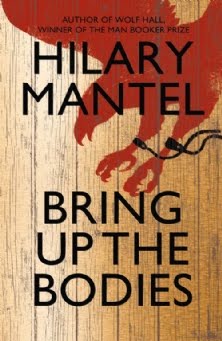
Bring Up the Bodies
by British author Hilary Mantel is the
sequel to her award winning Wolf Hall. The well known story of Henry VIII is given
new life through her highly interesting tale.
It’s new and fresh. The story
begins in the fall of 1535,
Henry tiring wearying of Anne Boleyn,
who hasn’t given him with a male heir,
already has his eye on shy, dull, flat-chested Jane Seymour, for whom even her
family doesn’t have much use until they see the advantages of being related to
the queen.
The king’s agent for disposing of Anne, is his chief
minister, Thomas Cromwell, one of Mantel’s most intriguing creations and actually the voice of the
book. Here Cromwell is not the a demonic
figure, the opposite of the sainted Thomas More, as in most tellings . Her Cromwell, is no saint either, but he is
not all bad and comes across as surprisingly warm and interesting. Bring Up the Bodies is in many ways a story
of tale of politics. Machiavellli would
have nodded his head in approval.
As you may know I love historical fiction and this is a good
one. One might not always like the Tudors with their major foibles and angst
but they certainly knew how to take charge…

Tuesday, August 21, 2012

Manhunt

Peter Bergen is the journalistic expert on reporting on the terrorist central al-Qaeda and Osama bin Laden. He interviewed him in the late 90’s wrote
definitive books and now, in Manhunt , Bergen picks up the thread with this carefully crafted yet broad account of the pursuit and killing of bin Laden.
There are new details of bin Laden’s flight after the
crushing defeat of the Taliban to Tora Bora, where American forces came
startlingly close to capturing him, and of the fugitive leader’s attempts to find
a secure hiding place. As the only journalist to gain access to bin Laden’s
Abbottabad compound before the Pakistani government demolished it, Bergen
paints a vivid picture of bin Laden’s grim, Spartan life in hiding and his
struggle to maintain control of al-Qaeda even as American drones systematically
picked off his key lieutenants.
It was, as Peter Bergen points out, the most
intensive and expensive manhunt of all time. The cost, simply in terms of funds funnelled to American intelligence services over the past decade,was somewhere around half a trillion dollars. The indirect costs in
government regulation, control and erosion of American rights and image was
incalculable. Whether all that was
necessary or not is a controversial subject.
The manhunt and threat to American existence was hyped beyond all common
sense. An initially small group of
fanatics did NOT pose an existential threat to the American nation as Fascism
and Communism did in the twentieth century.
Our response was a " War of Terror” , a misguided and mismanaged war of
choice in Iraq and the dropping the eye on the ball in Afghanistan led to a ten
year chase which only President Obama and a refocused and energized CIA and
other security agencies finally brought to a successful conclusion with the
killing of the master terrorist…..

Friday, August 17, 2012

Alexander The Great


"I have always been a soldier. I have known no other life." With those words Steven Pressfield (Gates of Fire; Tides of War) crawls
inside the brave heart of Alexander the Great in this chronicle of the king's
bloody and extraordinary accomplishments and boundless ambition. Here the historical novel is presented as Alexander's confessions (and lessons) to his brother-in-law, Itanes. The great Macedonian commander and his increasinglyreluctant armies try to figure out how to cross "this river of India" to engage in yet another battle. Alexander's
voice swoops from high-minded rhetoric to earthy vernacular as he regales Itanes
with bloody battle scenes and stories of horror and triumph Like the epic "Gates of Fire"
Pressfield does what few can do: Transport us to a time in history and make us
feel as if we are there. His attention to detail both with regard to
tactics/philosophy and everyday life, rich and historically accurate while
spinning a darn good story are what makes his historical novels the creme de la
creme. Alexander the Great, was one ofthe greatest hero conquerors ever. He
stands only with Caesar at the top of his class. He describes the tactics of
his army as they faced and defeated foes that that far outnumbered them. The Virtues of War is actually more about leadership than about battles. Perhaps I should say about the psychology of leadership and yes the demons that can invade a brave heart….

Saturday, August 11, 2012

The End Of War

The End Of War – A Novel Of the Race For Berlin by David L.
Robins
The title of this novel sounded good but like the real “The War To End
All Wars” (WWI), World War II didn’t turn out that way. Actually though the story was about how the war actually ended. The British and
American armies were racing toward Berlin in the closing montsh of the war. It
was a close race and the the Americans (Eisenhower) dropped out for tactical
reasons. Churchill saw the political consequences but by this time the Americans
had the final say… Was this a major blunder which ultimately prolonged the Cold
War? The “what ifs” of history can be fascinated and this book meets that test.
Still, the point seems a little mute since we know how that all turned out in
the long run. The story behind the leading political leaders and generals is well known for devoted history buff. It's the well formulated imaginary characters that give this book its real interest. Overall I’d give this book a B+…..

Saturday, August 4, 2012

Not Minnesota Nice

"Minnesota Nice" is the stereotypical behavior of
people born and raised in Minnesota, to be courteous, reserved, and
mild-mannered. The cultural characteristics of Minnesota Nice include a polite
friendliness, an aversion to confrontation, a tendency toward understatement, a
disinclination to make a fuss or stand out, emotional restraint, and
self-deprecation. It can also refer to traffic behavior, such as slowing down
to allow another driver to enter a lane in front of the other person. Critics
have pointed out negative qualities, such as passive aggressiveness and
resistance to change.
In 1862
though, after four years of statehood, and the outbreak of civil war Minnesota
wasn’t so nice. Another civil war broke out within the state between the white
settlers and the Dakota Nation. 1862, Minnesota was
still a young state, part of a frontier inhabited by more than one million
Indians. Times were hard and Indian families hungry. When the U.S. government
broke its promises, some of the Dakota Indians went to war against the white
settlers. Many Dakota did not join in, choosing to aid and protect settlers
instead. The fighting lasted six weeks and many people on both sides were
killed or fled Minnesota. Former Minnesota governor Henry Sibley led an expedition
of soldiers and Dakota scouts against the Dakota warriors. The war ended on
December 26, 1862, when thirty-eight Dakota Indians were hanged in Mankato in
the largest mass execution in U.S. history. Afterwards the government forced
most of the remaining Dakota to leave Minnesota. For white Minnesotans, their
experience of blood and terror negated all promises they had made to the
Dakota. Stories and history books told about the great "Minnesota
Massacre," but for many years the Indian side of the story was ignored. Now you can read the “other side of the
story "In Through Dakota Eyes.” While
the book lacks a clearly followed chronology, it consists of a collection of
original documents from legal proceedings and oral history which is well worth
the readers time. If your interested in the tragic story of when
hundreds of settlers, Indians, soldiers and bystanders were killed this
is the book for you. I highly recommend it.