Troutbirder

Troutbirder
To Go To Troutbirders Nature Blog (click on above picture)

Tuesday, November 5, 2013

Trains


It was Christmas Eve 1949. My cousin Prudy and I stood proudly in front of the Christmas tree, in my grandmas house in St. Paul, holding up our presents for all to see. Mine was an 027 gauge Lionel electric train. It doesn’t get any better than that. Thus began a lifelong interest in trains. I still have it on display in our basement.

Flash ahead a few years to the early fifties. I lived with my parents and two brothers in a new home on the East Side in St. Paul. It’s was the Daytons Bluff area. Below the bluff lay the Mississippi river and lots of railroad tracks and two "railroad yards." They belonged to the Milwaukee Road and the "Q" (Burlington & Quincy)


Our next door neighbor, Art, was a yard engineer for the Milwaukee Road. He didn't drive, so he walked to and from work every day, except on Saturdays. That's when my father picked him up at work. A trip to downtown St. Paul followed to cash his paycheck and pick up a case of an "adult beverage." I got to tag along.
More often than not on these Saturday afternoons, I was invited to climb up into the cab of the steam engine. Art would wave me aboard. It was a steep climb up into the cab.

Each and every time the excitement built. There was a cord hanging down, which when you pulled it, the steam whistle sounded so loud they must have been able to hear it miles away. A bin of coal was behind the engineers seat. I usually got to take a few shovels full, after opening the boiler door, and pitch it into the flames. It’s was very hot.


The biggest thrill of all was to back the train onto the "turntable." This was a revolving platform which turned to align each train into its own stall. I was ten or eleven years old and pretending to be Casey Jones. The neighborhood kids played in Indian Mounds Park high on the bluffs above the river. I can still picture that river, the airport beyond it and the railroad tracks far below. There were passenger trains like the orange and yellow Hiawatha of the Milwaukee and the silver bulleted Zephyr of the Burlington Road speeding by on their way to faraway places.

The steam engines are  long gone now except for a few touristy amusement rides. The sound of the diesel and later electric engines wasn’t nearly as exciting as the huff and puff of the steamers. Still, I’m left with fond memories of my Dad, Art the engineer, and those Saturday afternoons of boyhood enchantment.


Wednesday, October 30, 2013

The Hindenberg disaster

These photographs are truly amazing. So is the newsreel!   (frame 22) It's been 75 years......

Saturday, October 26, 2013

A Rose For A Crown


AN UNFORGETTABLE HEROINE,

A KING MISUNDERSTOOD BY HISTORY,

A LOVE STORY THAT HAS NEVER BEEN TOLD

Well, that’s what the blurb said.  And some thirty plus female reviewers on a historical novel web site mostly agreed.  Apparently, of late, I’ve been reading the book equivalents of “chick flicks.”  I can live with that….

I just finished  A Rose for the Crown, by Anne Easter Smith. She take to task  the Tudor Dynasty’s well known hack Shakespeare, who is  roundly rebutted for trashing Richard The Thirds reputation. Seen through the eyes of the woman who was the mother of his illegitimate children, a woman who loved him for who he really was, he comes off as not such a bad fellow As the mistress,  Kate Haute,  moves from her peasant roots to the luxurious palaces of England,  a remarkable story ensues.

The bare bones of this novel is historically accurate but our heroine is fictional because though the King had  three illegitimate children,  history is doesn’t tell us who their mother was. Thus Katherine Haute is fictional, but the world she lives in is not. The story is set in the time of the War of the Roses.  As any good story the reader is drawn into interactions of the main characters and the time and place they lived in. For my part I found the tale quite fascinating. Another book quite well done on this era is   is Sharon Kay Penman’s Sunne in Splendour.  Actually,  I think I may have become addicted to it….

Sunday, October 20, 2013

Who Is It?


You were born in a small town in what was then the Austrian Empire, now part of Croatia. You are a brilliant inventor, physicist, mechanical and electrical engineer. You are well aware of your own genius, and you are driven to do whatever it takes to realize your dreams. You will redefine the term "mad scientist"; your home country will honor you and an exciting high-end consumer product will be named after you 150 years after your birth.   WHO ARE YOU?


You are Nikola Tesla, founder of the Tesla Electric Company. You will go on to patent a brushless alternating current induction motor based on a rotating magnetic field principle. The invention will attract the attention of the Westinghouse company, and your investors will sell it to them for $60,000 in cash and stock and generous royalties. Westinghouse will also hire you as an independent consultant at their Pittsburgh laboratories.

 The year 1891 will be a banner year for you. You will demonstrate wireless energy transmission, which will become known as "the Tesla Effect"; you will patent the Tesla Coil; and you will become a naturalized citizen of the United States shortly after your 35th birthday.

You will go on to do groundbreaking work on atmospheric electricity, telegraphy and new types of engines including a steam-powered device dubbed "Tesla’s oscillator." Some of your wilder theories, coupled with your personal behaviors, will lead to your being categorized as a "mad scientist"—but in 1931 you will appear on the cover of Time Magazine.

 In 2003, sixty years after your death, a group of Silicon Valley entrepreneurs will set out to prove that "electric vehicles can be awesome." They will name their company Tesla Motors in your honor.
And for 2014  The Tesla Model S........


Monday, October 14, 2013

Top Ten Historical Fiction

Historical fiction are novels that re-create a period or event in history and often use historical figures as some of its characters. To be deemed historical, a novel must have been written at least fifty years after the events described.
Most of us read fiction for pleasure, but some of us gravitate especially to works about the past. People have enjoyed historical fiction since 800 BC when Homer wrote about the Trojan War in the Iliad. The worlds to which historical fiction carries us may seem utterly different from our own - but they really existed. A deep understanding of the past can help us understand our own time and our own motivations better. And by blending history and fiction, a novel lets us do more than simply read history: it lets us participate in the hopes, fears, passions, mistakes and triumphs of the people who lived it. It’s not history as such but a great writer. who has done meticulous research, can truly bring the past alive.
The following listed books are some of my favorite novels of historical fiction. I’ve read them all, some more than once.

Count of Monte Cristo by Dumas
 
 Devil's Brood by Sharon Kay Penman in the Henry II & Eleanor of Aquitaine series

 Gates of Fire by Steven Pressfield


Shogun by James Clavell   
 

First Man in Rome (and following books) by Colleen McCullough 
Outlander - Diana Gabaldon  

 Pillars of the Earth and World Without End by Ken Follet
   Killer Angels....Michael Shaara   
War & Peace by Tolstoy 

Agincourt by Bernard Cornwell
Now what are some of your favorites?

Saturday, October 12, 2013

Schooling In The Black Hills

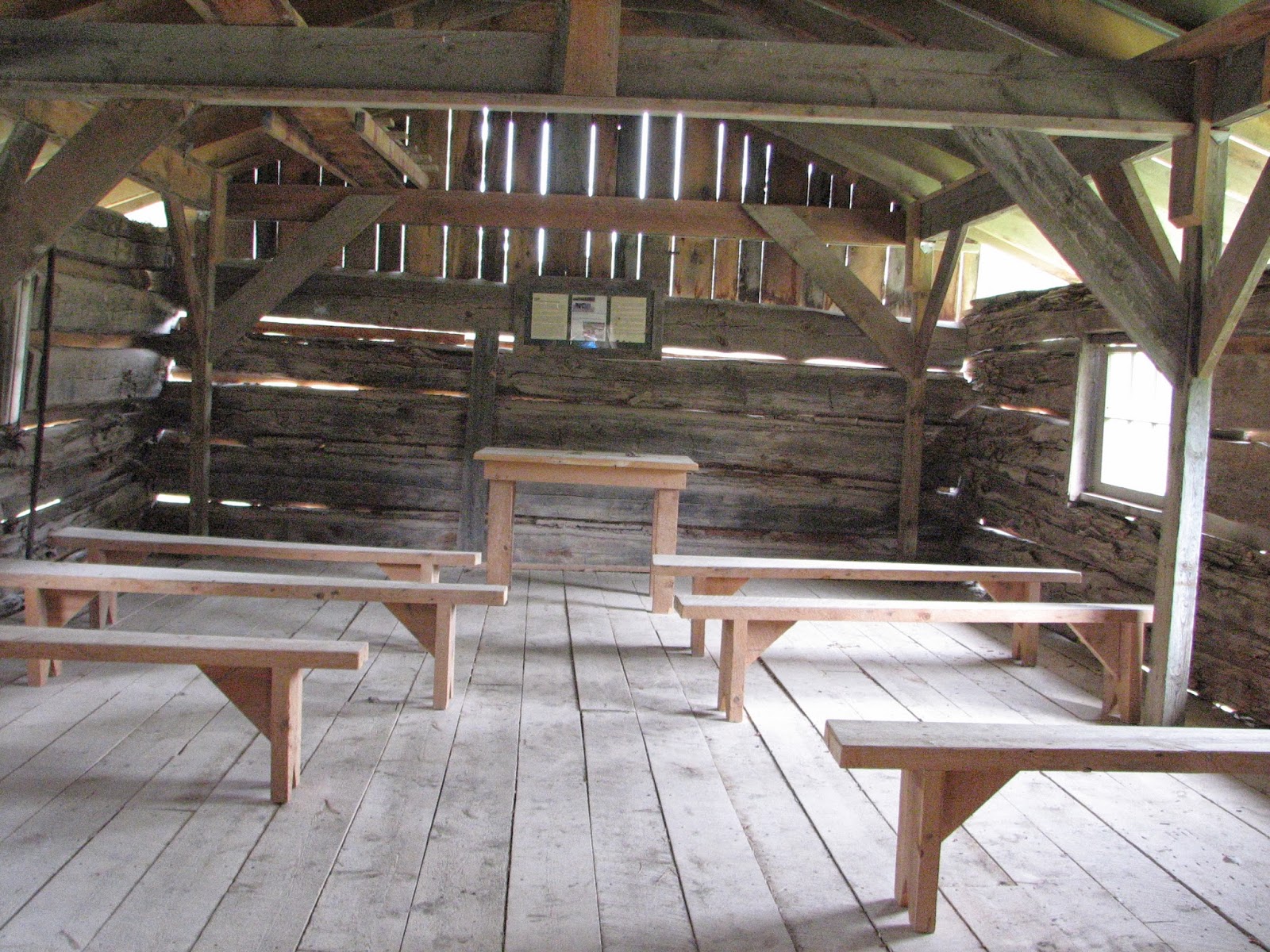
In the gorgeous Black Hills of South Dakota we recently ran across a school as they used to be. Readin. Written and Rithmatic.  Take a look....


And, of course, it didn't hurt that the setting was gorgeous.  Though I'm sure the children always paid attention, were well behaved and above average.....


Saturday, October 5, 2013

A Passion To Teach. Fifty-Eight Years of Humorous, Weird, and Engaging Tales


Author Richard Kowles is Distinguished Professor Emeritus in Biology at Saint Mary s University Minnesota in Winona, MN. He has taught for the past fifty-eight years at various levels, initially at the high school level and then at the University. Gaining his PhD. he carried on his career both in the research laboratory and the classroom.  Clear he loved both but he was most passionate about teaching.  Incidentally, he and I were colleagues for a few years teaching high school in small town Minnesota.

 “A Passion to Teach: Fifty-Eight Years of Humorous, Weird, & Engaging Tales”  is both a great memoir of growing up in tough circumstances and succeeding but also a warm and engaging  and full of  funny stories of learning to teach and being great at it.  “It’s been a wonderful career,” he said. “The students have kept me young and on my toes.”

I think what most appealed to me about this book was the fun that Kowles obviously had teaching. There was a passion there to help students learn and joy satisfaction when they did.

I know I enjoyed my work till the day I retired or as Kowles put “If you can’t have fun, maybe you should look somewhere else.”  If you or someone you know is interested in looking at a teaching career from the inside out or just plain a fun read, this might be the book for you.

Monday, September 23, 2013

Norwegian Math Test

Ole wants a job, but the foreman won't hire him until he passes a little math test.

Here is your first question, the foreman said. 'Without using numbers, represent the number 9.'

'Without numbers?' Ole says, 'Dat's easy.' and proceeds to draw three trees.

'What's this?' the boss asks.

'Vot! You got no brain? Tree and tree and tree make nine,' says Ole.

'Fair enough,' says the boss. 'Here's your second question. Use the same rules, but this time the number is 99.'

Ole stares into space for a while, then picks up the picture that he has just drawn and makes a smudge on each tree. 'Dar ya go.'

The boss scratches his head and says, 'How on earth do you get that to represent 99?'

'Each of da trees is dirty now. So, it's dirty tree, and dirty tree, and dirty tree. Dat is 99.'

The boss is getting worried that he's going to actually have to hire this Norwegian, so he says, 'All right, last question. Same rules again, but represent the number 100.'

Ole stares into space some more, then he picks up the picture again and makes a little mark at the base of each tree and says, 'Dar ya go. Von hundred.'

The boss looks at the attempt. 'You must be nuts if you think that represents a hundred!'

Ole leans forward and points to the marks at the base of each tree and says, 'A little dog come along and pooped by each tree. So now you got dirty tree and a turd, dirty tree and a turd, and dirty tree and a turd, vich makes von hundred.'

'So, ven do I start?

Tuesday, September 17, 2013

Christ and His Saints Slept


It was so bad the people said "Christ and His Saints Slept."It was in the 12th century, several generations after the Norman conquest, of England. Civil war raged across the land. Two people battled for the English Crown. One a man and most surprisingly, the other, a woman.
The woman was Maude, daughter of Henry I, who dies without a male heir. He annoints and trains his daughter for the job. She is smart, courageous and yes stubborn. The problem is many of the English barons (this is a feudal system) will not submit to a woman. Mauds cousin usurps the throne and the battle is on, as some of her barons and relatives remain loyal.
Never quite fullfilling her quest, she becomes the "mother" of kings. In effect, through the child she bore to the abusive Count Geoffrey of Breton, a son, the future Henry II, founds the Plantagenet Empire and dynasty. What a remarkable story. What a remarkable woman! I loved it.
This book is the first in a series of eventually to be four volumes, in author Sharon Kay Penman's "Eleanor of Aquitaine" series. If you like historical fiction this is a real good stuff. Penman combines excellent historical background knowledge with realistically drawn characterizations.