Troutbirder

Troutbirder
To Go To Troutbirders Nature Blog (click on above picture)

Friday, August 24, 2012

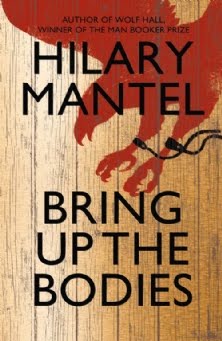
Bring Up the Bodies
by British author Hilary Mantel is the
sequel to her award winning Wolf Hall. The well known story of Henry VIII is given
new life through her highly interesting tale.
It’s new and fresh. The story
begins in the fall of 1535,
Henry tiring wearying of Anne Boleyn,
who hasn’t given him with a male heir,
already has his eye on shy, dull, flat-chested Jane Seymour, for whom even her
family doesn’t have much use until they see the advantages of being related to
the queen.
The king’s agent for disposing of Anne, is his chief
minister, Thomas Cromwell, one of Mantel’s most intriguing creations and actually the voice of the
book. Here Cromwell is not the a demonic
figure, the opposite of the sainted Thomas More, as in most tellings . Her Cromwell, is no saint either, but he is
not all bad and comes across as surprisingly warm and interesting. Bring Up the Bodies is in many ways a story
of tale of politics. Machiavellli would
have nodded his head in approval.
As you may know I love historical fiction and this is a good
one. One might not always like the Tudors with their major foibles and angst
but they certainly knew how to take charge…

Tuesday, August 21, 2012

Manhunt

Peter Bergen is the journalistic expert on reporting on the terrorist central al-Qaeda and Osama bin Laden. He interviewed him in the late 90’s wrote
definitive books and now, in Manhunt , Bergen picks up the thread with this carefully crafted yet broad account of the pursuit and killing of bin Laden.
There are new details of bin Laden’s flight after the
crushing defeat of the Taliban to Tora Bora, where American forces came
startlingly close to capturing him, and of the fugitive leader’s attempts to find
a secure hiding place. As the only journalist to gain access to bin Laden’s
Abbottabad compound before the Pakistani government demolished it, Bergen
paints a vivid picture of bin Laden’s grim, Spartan life in hiding and his
struggle to maintain control of al-Qaeda even as American drones systematically
picked off his key lieutenants.
It was, as Peter Bergen points out, the most
intensive and expensive manhunt of all time. The cost, simply in terms of funds funnelled to American intelligence services over the past decade,was somewhere around half a trillion dollars. The indirect costs in
government regulation, control and erosion of American rights and image was
incalculable. Whether all that was
necessary or not is a controversial subject.
The manhunt and threat to American existence was hyped beyond all common
sense. An initially small group of
fanatics did NOT pose an existential threat to the American nation as Fascism
and Communism did in the twentieth century.
Our response was a " War of Terror” , a misguided and mismanaged war of
choice in Iraq and the dropping the eye on the ball in Afghanistan led to a ten
year chase which only President Obama and a refocused and energized CIA and
other security agencies finally brought to a successful conclusion with the
killing of the master terrorist…..

Friday, August 17, 2012

Alexander The Great


"I have always been a soldier. I have known no other life." With those words Steven Pressfield (Gates of Fire; Tides of War) crawls
inside the brave heart of Alexander the Great in this chronicle of the king's
bloody and extraordinary accomplishments and boundless ambition. Here the historical novel is presented as Alexander's confessions (and lessons) to his brother-in-law, Itanes. The great Macedonian commander and his increasinglyreluctant armies try to figure out how to cross "this river of India" to engage in yet another battle. Alexander's
voice swoops from high-minded rhetoric to earthy vernacular as he regales Itanes
with bloody battle scenes and stories of horror and triumph Like the epic "Gates of Fire"
Pressfield does what few can do: Transport us to a time in history and make us
feel as if we are there. His attention to detail both with regard to
tactics/philosophy and everyday life, rich and historically accurate while
spinning a darn good story are what makes his historical novels the creme de la
creme. Alexander the Great, was one ofthe greatest hero conquerors ever. He
stands only with Caesar at the top of his class. He describes the tactics of
his army as they faced and defeated foes that that far outnumbered them. The Virtues of War is actually more about leadership than about battles. Perhaps I should say about the psychology of leadership and yes the demons that can invade a brave heart….

Saturday, August 11, 2012

The End Of War

The End Of War – A Novel Of the Race For Berlin by David L.
Robins
The title of this novel sounded good but like the real “The War To End
All Wars” (WWI), World War II didn’t turn out that way. Actually though the story was about how the war actually ended. The British and
American armies were racing toward Berlin in the closing montsh of the war. It
was a close race and the the Americans (Eisenhower) dropped out for tactical
reasons. Churchill saw the political consequences but by this time the Americans
had the final say… Was this a major blunder which ultimately prolonged the Cold
War? The “what ifs” of history can be fascinated and this book meets that test.
Still, the point seems a little mute since we know how that all turned out in
the long run. The story behind the leading political leaders and generals is well known for devoted history buff. It's the well formulated imaginary characters that give this book its real interest. Overall I’d give this book a B+…..

Saturday, August 4, 2012

Not Minnesota Nice

"Minnesota Nice" is the stereotypical behavior of
people born and raised in Minnesota, to be courteous, reserved, and
mild-mannered. The cultural characteristics of Minnesota Nice include a polite
friendliness, an aversion to confrontation, a tendency toward understatement, a
disinclination to make a fuss or stand out, emotional restraint, and
self-deprecation. It can also refer to traffic behavior, such as slowing down
to allow another driver to enter a lane in front of the other person. Critics
have pointed out negative qualities, such as passive aggressiveness and
resistance to change.
In 1862
though, after four years of statehood, and the outbreak of civil war Minnesota
wasn’t so nice. Another civil war broke out within the state between the white
settlers and the Dakota Nation. 1862, Minnesota was
still a young state, part of a frontier inhabited by more than one million
Indians. Times were hard and Indian families hungry. When the U.S. government
broke its promises, some of the Dakota Indians went to war against the white
settlers. Many Dakota did not join in, choosing to aid and protect settlers
instead. The fighting lasted six weeks and many people on both sides were
killed or fled Minnesota. Former Minnesota governor Henry Sibley led an expedition
of soldiers and Dakota scouts against the Dakota warriors. The war ended on
December 26, 1862, when thirty-eight Dakota Indians were hanged in Mankato in
the largest mass execution in U.S. history. Afterwards the government forced
most of the remaining Dakota to leave Minnesota. For white Minnesotans, their
experience of blood and terror negated all promises they had made to the
Dakota. Stories and history books told about the great "Minnesota
Massacre," but for many years the Indian side of the story was ignored. Now you can read the “other side of the
story "In Through Dakota Eyes.” While
the book lacks a clearly followed chronology, it consists of a collection of
original documents from legal proceedings and oral history which is well worth
the readers time. If your interested in the tragic story of when
hundreds of settlers, Indians, soldiers and bystanders were killed this
is the book for you. I highly recommend it.

Sunday, July 29, 2012

Conquest - The English Kingdom of France

In the words of Juliet Barker the author of Conquest The English Kingdom of France.
Juliet says: "The most difficult thing about writing a book is usually finding the subject, especially after a major success like Agincourt. I had toyed with the idea of writing about Joan of Arc but my publishers said they wanted to know what happened after the battle of Agincourt and I realised I didn’t know myself. My knowledge of the period ended with Henry V so I was aware that he had invaded France a second time, conquered much of northern France and forced Charles VI to recognise him as his heir. After that, I realised I had only the vaguest notion of what had occurred. In fact I’m ashamed to admit that I thought the English were expelled from France as a result of Joan of Arc’s appearance on the scene. It was therefore a major revelation to me to discover that she was just a blip in the story of the English occupation which continued for another twenty years – twice as long as before her arrival.It was only after I began my research that I discovered that I was treading new ground: amazingly, there has never been a narrative history dedicated to the last thirty years of the Hundred Years War. This gave me a major headache in that I had to create a chronological structure out of a huge number of conflicting sources and I often found that I had to rewrite passages in the light of newly discovered information. On the other hand, I had a wealth of new material describing not just the epic battles and sieges but also the personal stories of those who defended the English kingdom of France and those who lived under occupation.What fascinated me – as with Agincourt – were these human stories which remind us that that these were real people no different to ourselves. The poor French girl Jehanette Roland, for instance, who fell in love with an English herald and was all set to marry him just at the point when Charles VII reconquered Paris: the new government forcibly intervened to separate them, insisting that marriage with the enemy could not be allowed. Or Robert Stafford who complained that it was impossible for him to defend his fortress since his sole gunner was absent, the only cannon was in need of repair and there was just one crossbow left in the armoury – and that had no string. In our own time there is a horrible familiarity in the plight of those on the ground, fighting and often giving their lives to defend the English kingdom of France whilst denied the men, money and equipment they needed by the politicians who had sent them there in the first place. Conquest tells an extraordinary story – and one that ought to be remembered." What the cover says: In her best-selling Agincourt, Juliet Barker gave us the definitive narrative of Henry V’s extraordinary victory over the French. Now, in Conquest, she tells the equally remarkable, but largely forgotten, story of the dramatic years when England ruled France at the point of a sword.
Troutbirder says.... "well done."

Monday, July 23, 2012


Former Secretary of State Madeliene Albright writes of her childhood, family and the tortured history of the land of her birth- The Czech Republic, in her new book Prague Winter. It was only recently that she found out that most of her relatives were killed in the Holocaust. Her parents, who escaped in the early phases of WWII,chose not to tell anyone of their Jewish ancestry...
I found this book to be the best personal memoir I had read in years.

Friday, June 8, 2012

The Presidents Club

Once in a while our local librarian (and a former student) notifies me of the arrival of a new book she thinks I might enjoy. Thus I received a copy of The Presidents Club by Nancy Gibbs and Michael Duffy. It's one of the most exclusive clubs in the world, usually boasting only six or fewer members. This club has only one requirement for membership: having served as President of the of the United States. I must admit I was a little skeptical at first. Another Washington political potboiler filled with rumor, speculation about motives and unsubstantiated so-call "facts". Not at all. The Presidents Club is a clear and well-written glimpse into the modern presidency. It's worth reading and rereading for its behind-the-scenes insights.
It all began with Harry Truman bringing Herbert Hoover back from the limbo of being assigned the entire blame for the Great Depression. Hoover was given the job of unscrambling the bureaucratic logjam block food aid to a hungry and war torn Europe after World War II. This was exactly the same service he had successfully performed for President Wilson after World War II. A working relationship and even friendship ensued between the two men that in spite of future up and downs among future presidents set up pattern for the "club." The authors proceeded to explore how the relationships between former chief executives of often very different ideologies and politics have shaped history. I found these relationships sometimes petty and even distasteful but quite often inspiring. That was particularly so in these ideologically rigid and highly polarized times.
The sourest note in the whole book for me was to learn what a truely amoral, even immoral man, Richard Nixon proved to be. This relates to the story of Nixon's actions during the '68 presidential campaign, his successful effort to kill President Johnson's desperate hope for talks in Paris to end the Vietnam war in 1968. And Humphrey's well intentioned but mistaken decision not to publicly incriminate Nixon as a traitor to his country. The vicious block thrown by Nixon and his henchmen, including the go-between, Madame Chenault, prolonged the war for seven years. LBJ, knowing from secret wiretaps, that Nixon, through Chenault, was double dealing, phoned Nixon and appealed to him not to endanger the peace effort. "Oh no, Mr. President, said Nixon to LBJ, I would never do anything like that." Thousands more Americans died in Vietnam in the succeeding years.

Monday, June 4, 2012

A Dead Duck


Meanwhile, the big story was happening in Embarrass, MN (where else!), where a distraught woman brought her pet, a very limp duck – an Aflac look-a-like – into a veterinary surgeon.The vet laid the pet on the table, then pulled out his stethoscope and listened to the bird's chest.After a moment or two, the vet shook his head sadly and said, "I'm sorry, your duck has passed away."The distressed woman wailed, "Are you sure?""Yes, I am sure. The duck is dead," replied the vet."How can you be so sure?" she protested. "I mean you haven't done any testing on him or anything. He might just be in a coma or something."The vet rolled his eyes, turned around and left the room.He returned a few minutes later with a black Labrador Retriever.As the duck's owner looked on in amazement, the dog stood on his hind legs, put his front paws on the examination table and sniffed the duck from top to bottom.He then looked up at the vet with sad eyes and shook his head.The vet patted the dog on the head and took it out of the room.A few minutes later he returned with a cat. The cat jumped on the table and also delicately sniffed the bird from head to foot. The cat sat back on its haunches, shook its head, meowed softly and strolled out of the room. The vet looked at the woman and said, "I'm sorry, but as I said, this is most definitely, 100% certifiably, a dead duck." The vet turned to his computer terminal, hit a few keys and produced a bill, which he handed to the woman.The duck's owner, still in shock, took the bill. "$550!" she cried. "$1550! – just to tell me my duck is dead!" The vet shrugged, "I'm sorry. If you had just taken my word for it, the bill would have been $20, but with the Lab Report and the Cat Scan, it's now $1550."And that’s the way it is!


btw... I'm off to the Mayo Clinic next week for some tests. Maybe I should bring Baron and Simba.... :)