

Troutbirder II: Book reviews and views.
Tuesday, December 18, 2012
Thomas Jefferson - The Art Of Power
Sunday, December 16, 2012
Washington & Jefferson Go Fishing
Reading voraciously has been a lifelong habit for me. For enjoyment, knowledge, and sometimes
retreat from the cares of life and the world.
Thus appalled by the news of the slaughter of innocents in Connecticut
on Friday, I fled to Jon Meacham’s wonderful new biography Thomas Jefferson The
Art of Power. I was as far as Chapter 23 Page240. Thus –
“There was a late snow in New York in the last week of April 1790. Not long afterward President Washington became so ill that he was thought to be dying. By early June, however, the president was well enough to take Jefferson along on a fishing trip off Sandy Hook. Jefferson, ever practical and optimistic, hoped any seasickness would ”carry off the remains of my headache.”

“There was a late snow in New York in the last week of April 1790. Not long afterward President Washington became so ill that he was thought to be dying. By early June, however, the president was well enough to take Jefferson along on a fishing trip off Sandy Hook. Jefferson, ever practical and optimistic, hoped any seasickness would ”carry off the remains of my headache.”

Guns don’t kill people. People kill people using guns. I
wonder if these two founding fathers and the others who added the 2nd
Amendment to the Constitution could see these massacres, in modern America, would they say “this is what we had in mind
when guaranteeing citizens right to keep and bear arms?” Loading a black powder musket would likely
not allow someone to kill dozens of children in minutes much less seconds….. It’s time to move on into the 21st
century and deal with the problems we face now.
Are you listening Judge Scalia? Probably not
Monday, December 10, 2012
War by Sebastian Junger
War by Sebastian Junger author the Pulitzer Prize winning The Perfect Storm.
Introduction This book is not about the politics, cultural perspective nor the strategy of this war. It is really about the nature of war itself and what is does to the very young Americans who mostly fight it. I found it especially interesting because I had several high school students who came back from the country wounded in more ways than one....
Book 1 Fear
Korengal Valley, Afghanistan Spring 2007
By cowardice I do not mean fear. Cowardice… is a label we
reserve for something a man does. What
passes through his mind is his own affair.
Lord Moran, The Anatomy of Courage
Book 2 KillingWe sleep soundly in our beds because rough men stand ready in the night to visit violence on those who would do us harm.
Winston Churchill (or George Orwell)
Book 3 Love
The coward’s fear of death stems in large part from his
incapacity to love anything but his own body. The inability to participate in
others’ lives stands in the way of his developing any inn resources sufficient
to overcome the terror of death. J Glenn Gary, The Warriors

Friday, December 7, 2012
The Blood Of Free Men
In June and July of 1944 the Allies were bogged down in the hedgerows
of Normady, and the fate of Paris hung in the balance. Warsaw, Antwerp, and Monte Cassino—were, or
would soon be, reduced to rubble as the Allies pushed on to defeat the Nazi
monsters. But Paris endured, thanks to a
divided cast of characters, from Resistance cells and Free French to an
unlikely assortment of diplomats, Allied generals, and governmental officials. Popular perception in the long run coalesced
on certain views of what happened. Some of it true. Other parts not….

In The Blood of Free Men, historian Michael Neiberg traces the forces vying for Paris, providing
a revealing new look at the city’s dramatic and triumphant resistance against
the Nazis. Saving Paris was not a sure thing that might have led to this
beautiful city being utterly destroyed. The Allies were intended to go aroun Paris
focuses on trapping the German army west of the Rhine. Many, but not all, of Paris’s citizens had chosen to lay low and
survive upon the Germans quick and surprising defeat of the French army in
1940 In August of 1944 they had to act as the Allied armies ever so
slowly approached and the city was starving. Then the city rose and that along
with clever diplomacy, and last-minute aid from the Allies, managed to save the
City of Lights. An intriguing story for sure.

Monday, December 3, 2012
Teacher Man
Frank McCourt grew up in exceptionally unhappy circumstances.
He was born in America and then left for Ireland with his parents eventually
moving back and forth several times. Then he became a teacher in New York City’s
public schools. He retired after thirty years in the classroom and more than a
decade ago Frank McCourt became an unlikely star when, at the age of sixty-six,
he burst onto the literary scene with Angela's Ashes, the Pulitzer
Prize-winning memoir of his childhood in Limerick, Ireland. As a retired
teacher myself, I read the story of his teaching career titled appropriately
enough as Teacher Man. I was both intrigued and appalled.
The book is both strong and irreverent. For a reader grown
increasingly tired of the barrage of criticism of public education Teacher Man
comes across as a tribute to teachers everywhere. The book records the trials,
triumphs and surprises of teaching in big city public high schools. Teacher Man shows
the author building on his honesty, creativity and ability to tell a great
story as, day after day, year after year, he worked to gain the attention and
respect of eventually thousands of students. These were students who often
presented more than the average share of adolescent problems and misbehavior.

I grew up in the Twin Cities but spent my teaching career in
rural Minnesota. McCourts career in New York City was alien territory to me. He
portrays himself as a really bad teacher. I find this suspect as it seems unlikely that he
would ever have been given the jobs he got, nor would he have been allowed to
continue with his completely unorthodox teaching methods. He survived and eventually students clamored
to be in his classes….
I’d rate this book a really good read.
Tuesday, November 27, 2012
Flight Behavior
Sometimes there are good fiction authors I've overlooked. My excuses include my belief that American
fiction hit a decline several decades ago to be surpassed by history and
biography. Historical fiction did keep pace though. The name Barbara Kingsolver
was not unknown to me because many of my friends, blogging and otherwise, had
mentioned her. I knew she was popular
with many female readers and not favored by the elitist critics. The same type
who don’t like historians who become wildly popular. Hmmm.
I read my first and her latest, Flight Behavior. Her writing is full of striking analogies,
glowing adjectives and is very evocative. Yes, the book centers
around the misunderstandings of social class , culture and the facts and the ignorance surrounding climate
change. In other words, it would get a
bad review on cable if anybody on Fix News read anything other than Ayn Rand
(assuming they read anything at all)

Tuesday, November 20, 2012
Lincoln

Daniel Day Lewis was Lincoln just a Merly Streep could be Julia Childs or Margaret Thatcher. Oddly enough though, it was the old detective and hard boiled crime stopper Tommy Lee Jones who astonished me as abolishonist Thadeous Stevens . Sally Fields was also spot on as Mary Todd Lincoln.
 This is a great film of ideas. It clearly has current relevance given our
presently divided nation and government. I highly recommend it.
This is a great film of ideas. It clearly has current relevance given our
presently divided nation and government. I highly recommend it.

Friday, November 16, 2012
Setting The World Ablaze
Book Review: SETTING THE WORLD
ABLAZE: WASHINGTON, ADAMS, AND JEFFERSON AND THE AMERICAN REVOLUTION (by John
Ferling). Professor John Ferling is considered one of the a top experts on the
American Revolution. He teaches at a college in Georgia. His account of
that time naturally attracted my interest as I do love American History.
John Ferling provides an insightful portrait of three men who led the
rebellion of the American colonies against Great Britain. Ferling compares and
contrasts Washington with John Adams and Thomas Jefferson, providing an interesting case study of the factors that
enabled a few remarkable men to go with the flow of history and ultimately shape it. Comparative history humanizes and adds depth to historical figures. The authors scholarly approach (think footnotes et. all.) to his subject might remind one of the old school, boring, approach to historical writing but Ferling overcomes this tendency with an evocative and dramatic writing style. Washington comes across, not as an icon but as a living breathing human being, who has a few less than perfect points and lot of goods ones.
Not so much for Jefferson. Ferling had one thing good to say about him: the man could write. And that's about it. He was a lousy leader, a self indulgent and rich Virginia planter, he was a racist who pretended to be otherwise.
 And then there's Adams. Ferling's
thesis here was that Adams, while ambitious, did everything in his power to assure the
independence of the colonies. I do think this book goes a long way to reinforce
the impression many people got from reading
David McCulloughs Pulitzer Prize winning biography on John Adams. That
is to say, that Adams supremely important role in the American Revolution had been vastly underrated
and largely ignored.
And then there's Adams. Ferling's
thesis here was that Adams, while ambitious, did everything in his power to assure the
independence of the colonies. I do think this book goes a long way to reinforce
the impression many people got from reading
David McCulloughs Pulitzer Prize winning biography on John Adams. That
is to say, that Adams supremely important role in the American Revolution had been vastly underrated
and largely ignored. Wednesday, November 7, 2012
The Faith of St. Nick
As we approach the beginning of the Advent Season, I just finished reading The Faith of St. Nick: An Advent Devotional by Ann Nichols. Ann is a fellow blogger whose unusual and always interesting blog ( http://www.stnicholasandchristmas.com/) focuses on the history of St. Nicholas (a.k.a.), Santa Claus and the many beautiful Greek Orthodox churches throughout the world dedicated to him. Which brings me back to the his faith.
 The day by day devotional tells the story of
the life and faith of the man who was
Nicholas of Myra. Known and revered thoughout Christianity this man of
great faith this iconic figure became the role model for Santa Claus. Each days topic includes scripture, history of the saints life and devotions. It is readable for children and would be especially great for parents to read to or with their children. Think Christmas gifts as Mrs. T and I did....
The day by day devotional tells the story of
the life and faith of the man who was
Nicholas of Myra. Known and revered thoughout Christianity this man of
great faith this iconic figure became the role model for Santa Claus. Each days topic includes scripture, history of the saints life and devotions. It is readable for children and would be especially great for parents to read to or with their children. Think Christmas gifts as Mrs. T and I did....

Sunday, November 4, 2012
The Longest Trip Home
Looking for something I hadn’t read in our small town
library I ran across a book by John Grogan titled The Longest Way Home. You remember John Grogan the author of the
memorable Marley and Me. Followed up by the movie of the same name starring
Owen Wilson and Jennifer Aniston. This book has to be good, I thought. And so
it was…

It turned out not to be a book about another dog. Instead, it was a
family memoir, anecdotal and at the same time heart rending, funny, and deeply
moving. Grogan grew up in a deeply pre-Vatican II Irish/ Catholic family, along
with three siblings. Grogan was the family brat who get into constant trouble
(think lovable Marley). He was trying to be a loyal son while slowly heading
down his own lifes path of vocations and opinion. That is to say he evolved from apathetic student to anti-establishment
underground newspaper editor and found his calling with the encouragement of a
high school English teacher. Ultimately, his parents' religious dream for their
children created a rift. Grogan failed to share their strict Catholic faith -
Sundays were for sleeping in, sex before marriage didn't condemn him to
damnation - and finally stops hiding that fact. They tried to avoid the
subject, but the religion that bound the young John to his parents separated
the adult John from them. The "trip home" in the title described his
attempts to cross that divide, with a satisfying result. This is
a great story of how the author painfully redefines his relationship with his
parents and copes with their aging. But best of all, his stories of their unconditional
love despite his abundant youthful mischief is very satisfying This isn't
Marley, the sequel. It's about life before Marley, life in the 1960s and 1970s
and how that shaped life in all the decades that have followed.
Not having been raised in a Catholic household I found some
of the anecdotes hard to believe. But
then what did I know? Many of the events
of the 60’s and 70’s left me as puzzled as my parents. Coming from a more
liberal Protestant tradition some of the social/cultural changes of that era seemed more natural and
necessary. Grogans book though reminded that in the end the tie that binds the
best is that of family….

Tuesday, October 30, 2012
American Empire
As some of you may know I’m a huge fan of authentically
based and well written popular history, biography and historical fiction. Think
Stephen Ambrose, David McCullough, Doris Kearns Godwin, Shelby Foote and many
others. They took history away from pedantic boredom and brought it to the
masses with the verve of real storytelling. Or the writers of fiction like
Coleen McCullough and Ken Follet who
brought the past alive with wonderful writing surrounding an aura of historical
accuracy.
Now comes Professor Joshua B Freeman’s American Empire – The
Rise of a Global Power The Democratic Revolution At Home 1945-2000. It’s densely factual and slow to read. Old
school with footnotes you might say. And yet, I couldn’t put it down. Perhaps it brought out the inner “history
geek” in me. But not really. This is a
book that I found by turns both fascinating and appalling. Fascinating in that
it tied together all the things about the last thirty years in our countries
development that I disliked and showed how they were connected. And appalling in that the pervasiveness of
the trends that brought those developments about and their interconnections seems likely
to mean that they will be with us for a long time.
In “American Empire,’’, the United States emerges as an
empire with a character all its own — modern, often subtle, but unmistakably
powerful. The author demonstrates how postwar economic growth helped spur the
great process of democratization that placed America in the first rank among
nations in terms of standard of living and basic rights for all citizens. Yet,
along with the rise of consumerism, globalism and prosperity, the power shifted
from the public to the private realm, specifically corporate. From the 1970s
onward, Freeman shows how incipient economic inequality, unharnessed military
spending and burgeoning political conservatism threatened to check much of that
social progress at the end of the century. The expansion of government with the
New Deal promoting socially benevolent programs generated an ongoing debate
about whether government should be a muscular arm of progressive reform in the
fashion of FDR or more restrained, the latter conservatism given new energy by
Barry Goldwater’s ascendancy in 1960. Freeman comes down fairly hard on
Kennedy’s “hyperbolic rhetoric” and “obsession with manhood and virility,”
while the sections on LBJ and the “democratic revolution” of the 1960s,
including civil-rights legislation and the antiwar movement, are masterly and
thorough. With the dawn of the ’70s, the country moved from “dreams to
nightmares,” from equal rights for women and gays toward an utter contempt for
government amid Watergate, urban decline, manufacturing shutdowns, stagflation,
new corporate models, deregulation and Reaganism. Fascinating yes. Appalling as well……

Sunday, October 21, 2012
Retorts

Some of history's greatest replies come from people we don't
usually associate with great wit. In the decades prior to World War II,
Mohandas "Mahatma" Gandhi led a massive campaign of civil
disobedience designed to help colonial India win its independence from the
British Empire. In 1931, shortly after being named Time magazine's "Man of
the Year," Gandhi traveled to London to meet with British authorities. The
entire nation was curious to learn more about this little brown man, as many
called him. Constantly swarmed by press and photographers, Gandhi was peppered
with questions wherever he went. One day a reporter yelled out, "What do
you think of Western civilization?" It was a defining moment, and Gandhi's
reply instantly transformed him from an object of curiosity into a celebrity.
In his heavy Indian accent, he answered:
Gandhi: "I think it would be a good idea."
Perhaps the most celebrated retort in the history of wit
occurred in a famous exchange between two 18th century political rivals, John
Montagu, also known as the Earl of Sandwich, and the reformist politician, John
Wilkes. During a heated argument, Montagu scowled at Wilkes and said
derisively, "Upon my soul, Wilkes, I don't know whether you'll die upon
the gallows, or of syphilis" (some versions of the story say "a vile
disease" and others "the pox"). Unfazed, Wilkes came back with
what many people regard as the greatest retort of all time:
JohnWilkes" "That will depend, my Lord, on whether
I embrace your principles, or your mistress. "
George Bernard Shaw (to Winston Churchill): Am reserving two tickets for you for my premiere. Come and bring a friend - if you have one.
Churchill: Impossible to be present for the first performance. Will attend second - if there is one.
And Troutbirder sez "I often come up with good retorts but they are usually about three days too late.".....
Sunday, October 14, 2012
The Red Baron, The Black& Tan Baron & Snoopy

The Red Baron - The first Red Baron was one of those heroes whose life seems almost scripted. Discipline, pride, hunting skills, and Teutonic patriotism all combined in this man, bringing him to the pinnacle of fame which long outlasted the man himself. But Richthofen was no caricature, methodically claiming 80 aerial victories, before falling himself, in a Wagnerian finale.

Snoopy von Peanuts und Schultz.
"Curse you, Red
Baron," cried Snoopy, the Mitty-esque canine ace of Charles Schultz'
Peanuts comic strip. Courage, determination, & perserverance against
insuperable odds, characterized this indomitable canine, who launching from his
doghouse, threw himself into the sky against the German flying ace. 
Baron von Goofus Und Katsenjaegger The ambusher supreme. He stalks and waits for the moment to strike. Unfortunately his feline enemies(the neighbors tribe of semi-wild cats) know the boundaries of the electric invisible fence border which confines Baron's attacks on the maruading song bird killers. His commander in chief (Troutbirder) is sympathetic to this cause but wishes to prevent forays into foreign territory, thus avoiding incidents with the neighbors. Baron also defends the homeland territory against intrusions by the squirrel tribe.

Friday, October 12, 2012
The Unfaithful Queen
From the title, those
inclined to prejudgment are likely to
think “slut” “bimbo” etc. Of course, her
husband, the king, is no longer a prize either.
The once handsome and athletic king is now fat, ill , bad tempered and
on his fifth wife. Oh and his
only surviving son and heir is very sick. This can’t end well.

Young Catherine Howard was doomed from the start when she
became the fifth wife and queen to the King Henry VIII. Catherine was the cousin of
his tragic second wife, Anne Boleyn and became proof that history can often
repeat itself. In "The Unfaithful Queen" by Carolly Erickson, the
story of Catherine Howard, another executed wife of Henry VIII has her story
told.
The novel begins with Catherine's youth and young adulthood
as an impoverished member of the rich and powerful Howard family. Used, abused and neglected as a
young girl by family and acquaintances Catherine witnesses the execution of her
cousin, Anne Boleyn who was once the beloved wife and queen of Henry VIII that
leaves an imprint on her life. Spunky but naïve the men around take what they
can. After his third wife Jane Seymore
dies in childbirth the king is “forced” to marry Anne of Cleves for political reasons.
King Henry is eventually charmed by young Catherine especially when he realizes
she is the daughter of his once beloved mistress, Jocasta. When his marriage to
the homely and difficult Anne of Cleves falls apart, Henry VIII makes the young
Catherine his bride, completely unaware of her romantic past. The marriage is
not a success though. King Henry's moods frighten Catherine and she struggles to
give a child to the impotent king. Frustrated by her life, Catherine continues
previous romantic and passionate affair
with Thomas Culpeper, a gentleman in the king's chamber. Her family and lover
all seem to think that if Tom fathers a son and the King thinks it’s his
everything will work of find. The old codger is likely to last much longer
anyway. Catherine's past eventually catches up to her as does her present
romance and she is left discarded, forgotten, and eventually executed by the
king, the same fate as her cousin who she once watched be executed. "The
Unfaithful Queen" is the story of a young woman's rise and downfall, all
due to having a past.
I must say I did find some sympathy for Catherine Howard but
then again this whole collection of troubled, vindictive and conniving people
wasn’t all that attractive. I suspect that the portrayal of some of them was
more fictional than historical. I do like historical fiction. The young woman
with the troubled background, Catherine Howard, deserved a better shake then…..
and in this book.
Monday, October 8, 2012


Monday, October 1, 2012
The One Percent Doctrine
Pulitzer-prize winning journalist and bestselling author Ron
Suskinds One Percent Doctrine is the inside story of the early genesis and
development of George Bushes “war on terror.”
It is nonfiction and contains many exclusive, historically significant
disclosures telling what went on behind the scenes.
The guiding principle
is known as The One Percent Doctrine. This is the secretive watchword and
strategy, designed by Dick Cheney, which divides America from its founding
democratic principles of law and justice It was this “principle” which led our
country down the avenue of decision
making being separated from real facts and analysis. Instead “gut” instincts on
the part of the President, the paniced and faulty reasoning of the Vice
President and his neo-con allies, led to an unmitigated disaster at home and
abroad. It was politicized incompetence at its worst.
Were Americas intelligence agencies unprepared before and
after the World Trade Towers fell? Yes. But they learned and got better. Unfortunately, the vital facts they learned
and the prescient analysis they came up with was basically ignored by the
Bushies. And the prime mover and conniver there was Dick Cheney, who formulated
an overriding "one percent" doctrine: threats with even a 1%
likelihood must be treated as certainties. Cherry picking and only the few
facts that coincided with their previously ill informed conclusions was the
result. I think a reading of this book
published in 2005 is essential reading for anyone interested in how the
operating mechanisms of our government were changed. Summing up - one word comes to mind…… appalling.

Sunday, September 16, 2012
Football
 The Sweet Season is by Austin Murphy who
has for years has covered major college football and the NFL. After fifteen years of traveling about half of
the year, while contending with the antics
of the spoiled major-level athletes of today (both
professionals and so-called amateurs), in 1999
Murphy took a leave of absence in order to temporarily move
with his family to Minnesota while
he wrote a book. The project he had in mind was to spend a
full season covering the 1999 campaign of the St. John's University team which plays Division III football under the guidance of legendary Coach John Gagliardi. Gagliardi
was probably the initial focus of the book as he closed in on the all-time
record for coaching wins, but almost immediately Murphy and
his family were instead captivated and rejuvenated by the alluring and low-key life of small college America, along with
many of the personalities around the school and its top-flight football team. For each week of the season the author beguiles us with
stories of on-campus events leading up to the game and the gradual growing together of his family under the charms of the rural town
and its school. This is a good book about small college football
that goes well beyond the action on the field. It at once creates a nostalgia and an appreciation for a collegiate world that is about more
than some of the conduct that now has become the norm in the
land of Division I. Think of the recent disaster at Penn State where misplaced college pride and egos allowed a sexual
predator on the coaching staff free to roam among his victims. Add that to the criminal behavior common among the so-called heroes of the NFL. A sad mess indeed. That mess is mostly about money. Because of that educational and personal integrity are no longer a critical consideration of major school and certainly not for the pros. Unbeknownst to many college football fans are players, teams, and coaches who play for the love of the sport. Division III NCAA football represents programs where athletic scholarships are forbidden. Athletes in Division III programs may be a step slower or a little smaller than their counterparts who receive scholarships, but they have an equal love for the game. THE SWEET SEASON is a wonderful story about young and old men sharing a love of sport and a love of life. Perhaps more important, it is a story of personal rejuvenation and rebirth for the author. Gagliardi wins with methods that would leave
football fans and coaches befuddled. His philosophy includes a list of 74
"NOs," including: no whistles, no playbooks, no hitting during the
week, and no cuts from the squad. He disdains calisthenics and serious physical drills. Plays are diagrammed on note cards. They do not tackle or cut block one another in practice. No matter how
talented the coach, he still must have quality athletes to win. Murphy
acknowledges that he came to this project with preconceived notions about the level of athletic skill in Division III. "I didn't think they'd suck, but I didn't know they'd be this quick, talented, or tough," he writes. Don't let the Roman numeral throw you, there's quality football in Division III. But the roster is filled with men who are more than football players. This book is more about the Olympic ideal of amateur sport which may have been lost as well. The love of the sport is the
driving motive. How refreshing…..
Thursday, September 6, 2012
Wolf Hall
 Wolf Hall by Hilary Mantel is the story of Henry VIII and Anne Boleyn as told by Thomas Cromwell. It tells of a time of turmoil in England history on the interface of religion and politics. The authors characterizations are crisp and fascinating.
The dialogue is often riveting and unfortunately confusing at times. Line after line end with a comma and the words, “he said.” Who said the reader might ask of a cast of character list that is
pages long? Perhaps in my dotage I’ve a tendency towards confusion but this is a little too much….
Monday, September 3, 2012
The Three R's
 The three R's. Rommney, Ryan & Rand.
There's something seriously disturbing about millions of tea partyiers who froth at the mouth at the idea of providing health care to the tens of millions of Americans who don't have it. Or who take
pleasure at the thought of privatizing and slashing bedrock social programs like Social Security or Medicare. As our country quickly drifts into an increasing divided society with the middle class being squeezed out of existence it is the right-wing moneyed elites who more and more openly
share their distaste for the working poor. Where do they find their
philosophical justification for this kind of attitude?
It turns out, you can trace much of this thinking back to
Ayn Rand, a popular cult-philosopher who exerts a huge influence over much of the right-wing and libertarian crowd.

Friday, August 31, 2012
Exit Plan
 It seems
Jerry Mitchell has some really rowdy friends but he still takes them for a boat
ride on his submarine. They’re actually
SEALS but not the barking kind. The
problem is the Iranians may have just built an atomic bomb and the Israelis are
about to bomb and start another Mideast War . Of course, then the U. S. will be
involved…..
That
defecting Iranian nuclear scientist has the real dope on this situation as to whether it’s all a scam to involve the
U.S. or not. Those SEALs will have to “extract” her from hostile
territory. They can do the job all right. Just ask Osama Bin Laden.
This whole scenario is a little remindful of the WMD problem for the Bushies. To bad the SEALS weren’t sent to handle that
problem. It might have save a lot of useless trouble.
For the exciting outcome check out Larry Bonds Exit Plan. I think he invented this type of techno/military thriller. If real
problems were only this excitingly action filled and always successfully
solved….
Friday, August 24, 2012
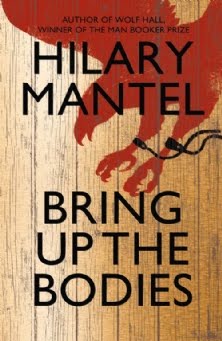 Bring Up the Bodies
by British author Hilary Mantel is the
sequel to her award winning Wolf Hall. The well known story of Henry VIII is given
new life through her highly interesting tale.
It’s new and fresh. The story
begins in the fall of 1535,
Henry tiring wearying of Anne Boleyn,
who hasn’t given him with a male heir,
already has his eye on shy, dull, flat-chested Jane Seymour, for whom even her
family doesn’t have much use until they see the advantages of being related to
the queen.
The king’s agent for disposing of Anne, is his chief
minister, Thomas Cromwell, one of Mantel’s most intriguing creations and actually the voice of the
book. Here Cromwell is not the a demonic
figure, the opposite of the sainted Thomas More, as in most tellings . Her Cromwell, is no saint either, but he is
not all bad and comes across as surprisingly warm and interesting. Bring Up the Bodies is in many ways a story
of tale of politics. Machiavellli would
have nodded his head in approval.
As you may know I love historical fiction and this is a good
one. One might not always like the Tudors with their major foibles and angst
but they certainly knew how to take charge…
Tuesday, August 21, 2012
Manhunt
 Peter Bergen is the journalistic expert on reporting on the terrorist central al-Qaeda and Osama bin Laden. He interviewed him in the late 90’s wrote
definitive books and now, in Manhunt , Bergen picks up the thread with this carefully crafted yet broad account of the pursuit and killing of bin Laden.
There are new details of bin Laden’s flight after the
crushing defeat of the Taliban to Tora Bora, where American forces came
startlingly close to capturing him, and of the fugitive leader’s attempts to find
a secure hiding place. As the only journalist to gain access to bin Laden’s
Abbottabad compound before the Pakistani government demolished it, Bergen
paints a vivid picture of bin Laden’s grim, Spartan life in hiding and his
struggle to maintain control of al-Qaeda even as American drones systematically
picked off his key lieutenants.
It was, as Peter Bergen points out, the most
intensive and expensive manhunt of all time. The cost, simply in terms of funds funnelled to American intelligence services over the past decade,was somewhere around half a trillion dollars. The indirect costs in
government regulation, control and erosion of American rights and image was
incalculable. Whether all that was
necessary or not is a controversial subject.
The manhunt and threat to American existence was hyped beyond all common
sense. An initially small group of
fanatics did NOT pose an existential threat to the American nation as Fascism
and Communism did in the twentieth century.
Our response was a " War of Terror” , a misguided and mismanaged war of
choice in Iraq and the dropping the eye on the ball in Afghanistan led to a ten
year chase which only President Obama and a refocused and energized CIA and
other security agencies finally brought to a successful conclusion with the
killing of the master terrorist…..

Friday, August 17, 2012
Alexander The Great

"I have always been a soldier. I have known no other life." With those words Steven Pressfield (Gates of Fire; Tides of War) crawls
inside the brave heart of Alexander the Great in this chronicle of the king's
bloody and extraordinary accomplishments and boundless ambition. Here the historical novel is presented as Alexander's confessions (and lessons) to his brother-in-law, Itanes. The great Macedonian commander and his increasinglyreluctant armies try to figure out how to cross "this river of India" to engage in yet another battle. Alexander's
voice swoops from high-minded rhetoric to earthy vernacular as he regales Itanes
with bloody battle scenes and stories of horror and triumph Like the epic "Gates of Fire"
Pressfield does what few can do: Transport us to a time in history and make us
feel as if we are there. His attention to detail both with regard to
tactics/philosophy and everyday life, rich and historically accurate while
spinning a darn good story are what makes his historical novels the creme de la
creme. Alexander the Great, was one ofthe greatest hero conquerors ever. He
stands only with Caesar at the top of his class. He describes the tactics of
his army as they faced and defeated foes that that far outnumbered them. The Virtues of War is actually more about leadership than about battles. Perhaps I should say about the psychology of leadership and yes the demons that can invade a brave heart….
Saturday, August 11, 2012
The End Of War
 The End Of War – A Novel Of the Race For Berlin by David L.
Robins
The title of this novel sounded good but like the real “The War To End
All Wars” (WWI), World War II didn’t turn out that way. Actually though the story was about how the war actually ended. The British and
American armies were racing toward Berlin in the closing montsh of the war. It
was a close race and the the Americans (Eisenhower) dropped out for tactical
reasons. Churchill saw the political consequences but by this time the Americans
had the final say… Was this a major blunder which ultimately prolonged the Cold
War? The “what ifs” of history can be fascinated and this book meets that test.
Still, the point seems a little mute since we know how that all turned out in
the long run. The story behind the leading political leaders and generals is well known for devoted history buff. It's the well formulated imaginary characters that give this book its real interest. Overall I’d give this book a B+…..
Saturday, August 4, 2012
Not Minnesota Nice
 "Minnesota Nice" is the stereotypical behavior of
people born and raised in Minnesota, to be courteous, reserved, and
mild-mannered. The cultural characteristics of Minnesota Nice include a polite
friendliness, an aversion to confrontation, a tendency toward understatement, a
disinclination to make a fuss or stand out, emotional restraint, and
self-deprecation. It can also refer to traffic behavior, such as slowing down
to allow another driver to enter a lane in front of the other person. Critics
have pointed out negative qualities, such as passive aggressiveness and
resistance to change.

In 1862
though, after four years of statehood, and the outbreak of civil war Minnesota
wasn’t so nice. Another civil war broke out within the state between the white
settlers and the Dakota Nation. 1862, Minnesota was
still a young state, part of a frontier inhabited by more than one million
Indians. Times were hard and Indian families hungry. When the U.S. government
broke its promises, some of the Dakota Indians went to war against the white
settlers. Many Dakota did not join in, choosing to aid and protect settlers
instead. The fighting lasted six weeks and many people on both sides were
killed or fled Minnesota. Former Minnesota governor Henry Sibley led an expedition
of soldiers and Dakota scouts against the Dakota warriors.
 The war ended on
December 26, 1862, when thirty-eight Dakota Indians were hanged in Mankato in
the largest mass execution in U.S. history.
 Afterwards the government forced
most of the remaining Dakota to leave Minnesota. For white Minnesotans, their
experience of blood and terror negated all promises they had made to the
Dakota. Stories and history books told about the great "Minnesota
Massacre," but for many years the Indian side of the story was ignored. Now you can read the “other side of the
story "In Through Dakota Eyes.” While
the book lacks a clearly followed chronology, it consists of a collection of
original documents from legal proceedings and oral history which is well worth
the readers time. If your interested in the tragic story of when
hundreds of settlers, Indians, soldiers and bystanders were killed this
is the book for you. I highly recommend it.

Sunday, July 29, 2012
Conquest - The English Kingdom of France
 In the words of Juliet Barker the author of Conquest The English Kingdom of France.
Juliet says: "The most difficult thing about writing a book is usually finding the subject, especially after a major success like Agincourt. I had toyed with the idea of writing about Joan of Arc but my publishers said they wanted to know what happened after the battle of Agincourt and I realised I didn’t know myself. My knowledge of the period ended with Henry V so I was aware that he had invaded France a second time, conquered much of northern France and forced Charles VI to recognise him as his heir. After that, I realised I had only the vaguest notion of what had occurred. In fact I’m ashamed to admit that I thought the English were expelled from France as a result of Joan of Arc’s appearance on the scene. It was therefore a major revelation to me to discover that she was just a blip in the story of the English occupation which continued for another twenty years – twice as long as before her arrival.It was only after I began my research that I discovered that I was treading new ground: amazingly, there has never been a narrative history dedicated to the last thirty years of the Hundred Years War. This gave me a major headache in that I had to create a chronological structure out of a huge number of conflicting sources and I often found that I had to rewrite passages in the light of newly discovered information. On the other hand, I had a wealth of new material describing not just the epic battles and sieges but also the personal stories of those who defended the English kingdom of France and those who lived under occupation.What fascinated me – as with Agincourt – were these human stories which remind us that that these were real people no different to ourselves. The poor French girl Jehanette Roland, for instance, who fell in love with an English herald and was all set to marry him just at the point when Charles VII reconquered Paris: the new government forcibly intervened to separate them, insisting that marriage with the enemy could not be allowed. Or Robert Stafford who complained that it was impossible for him to defend his fortress since his sole gunner was absent, the only cannon was in need of repair and there was just one crossbow left in the armoury – and that had no string. In our own time there is a horrible familiarity in the plight of those on the ground, fighting and often giving their lives to defend the English kingdom of France whilst denied the men, money and equipment they needed by the politicians who had sent them there in the first place. Conquest tells an extraordinary story – and one that ought to be remembered." What the cover says: In her best-selling Agincourt, Juliet Barker gave us the definitive narrative of Henry V’s extraordinary victory over the French. Now, in Conquest, she tells the equally remarkable, but largely forgotten, story of the dramatic years when England ruled France at the point of a sword.
Troutbirder says.... "well done."
Monday, July 23, 2012

Former Secretary of State Madeliene Albright writes of her childhood, family and the tortured history of the land of her birth- The Czech Republic, in her new book Prague Winter. It was only recently that she found out that most of her relatives were killed in the Holocaust. Her parents, who escaped in the early phases of WWII,chose not to tell anyone of their Jewish ancestry...
I found this book to be the best personal memoir I had read in years.
Friday, June 8, 2012
The Presidents Club
 Once in a while our local librarian (and a former student) notifies me of the arrival of a new book she thinks I might enjoy. Thus I received a copy of The Presidents Club by Nancy Gibbs and Michael Duffy. It's one of the most exclusive clubs in the world, usually boasting only six or fewer members. This club has only one requirement for membership: having served as President of the of the United States. I must admit I was a little skeptical at first. Another Washington political potboiler filled with rumor, speculation about motives and unsubstantiated so-call "facts". Not at all. The Presidents Club is a clear and well-written glimpse into the modern presidency. It's worth reading and rereading for its behind-the-scenes insights.
It all began with Harry Truman bringing Herbert Hoover back from the limbo of being assigned the entire blame for the Great Depression. Hoover was given the job of unscrambling the bureaucratic logjam block food aid to a hungry and war torn Europe after World War II. This was exactly the same service he had successfully performed for President Wilson after World War II. A working relationship and even friendship ensued between the two men that in spite of future up and downs among future presidents set up pattern for the "club." The authors proceeded to explore how the relationships between former chief executives of often very different ideologies and politics have shaped history. I found these relationships sometimes petty and even distasteful but quite often inspiring. That was particularly so in these ideologically rigid and highly polarized times.
The sourest note in the whole book for me was to learn what a truely amoral, even immoral man, Richard Nixon proved to be. This relates to the story of Nixon's actions during the '68 presidential campaign, his successful effort to kill President Johnson's desperate hope for talks in Paris to end the Vietnam war in 1968. And Humphrey's well intentioned but mistaken decision not to publicly incriminate Nixon as a traitor to his country. The vicious block thrown by Nixon and his henchmen, including the go-between, Madame Chenault, prolonged the war for seven years. LBJ, knowing from secret wiretaps, that Nixon, through Chenault, was double dealing, phoned Nixon and appealed to him not to endanger the peace effort. "Oh no, Mr. President, said Nixon to LBJ, I would never do anything like that." Thousands more Americans died in Vietnam in the succeeding years.

Monday, June 4, 2012
A Dead Duck

Meanwhile, the big story was happening in Embarrass, MN (where else!), where a distraught woman brought her pet, a very limp duck – an Aflac look-a-like – into a veterinary surgeon.The vet laid the pet on the table, then pulled out his stethoscope and listened to the bird's chest.After a moment or two, the vet shook his head sadly and said, "I'm sorry, your duck has passed away."The distressed woman wailed, "Are you sure?""Yes, I am sure. The duck is dead," replied the vet."How can you be so sure?" she protested. "I mean you haven't done any testing on him or anything. He might just be in a coma or something."The vet rolled his eyes, turned around and left the room.He returned a few minutes later with a black Labrador Retriever.As the duck's owner looked on in amazement, the dog stood on his hind legs, put his front paws on the examination table and sniffed the duck from top to bottom.He then looked up at the vet with sad eyes and shook his head.The vet patted the dog on the head and took it out of the room.A few minutes later he returned with a cat. The cat jumped on the table and also delicately sniffed the bird from head to foot. The cat sat back on its haunches, shook its head, meowed softly and strolled out of the room. The vet looked at the woman and said, "I'm sorry, but as I said, this is most definitely, 100% certifiably, a dead duck." The vet turned to his computer terminal, hit a few keys and produced a bill, which he handed to the woman.The duck's owner, still in shock, took the bill. "$550!" she cried. "$1550! – just to tell me my duck is dead!" The vet shrugged, "I'm sorry. If you had just taken my word for it, the bill would have been $20, but with the Lab Report and the Cat Scan, it's now $1550."And that’s the way it is!
btw... I'm off to the Mayo Clinic next week for some tests. Maybe I should bring Baron and Simba.... :)
Tuesday, May 29, 2012
Interviewing Mark Twain
 Flyfishig today? Too windy. Birding today? Too windy. Tree limb trimming today? Too windy. Instead, today, I had time to reflect upon a recent conversation I had with well known author and humorist Mark Twain. I had met him during a recent trip to Dubuque, Iowa. Mark Twain wrote hundreds of comments about the nature and cause of humor.
  This quote reflects my own view.
"What is it that strikes a spark of humor from a man? It is the effort to throw off, to fight back the burden of grief that is laid on each one of us. In youth we don't feel it, but as we grow to manhood we find the burden on our shoulders. Humor? It is nature's effort to harmonize conditions. The further the pendulum swings out over woe the further it is bound to swing back over mirth." - Interview in New York World Sunday Magazine, November 26, 1905
 Troutbirder - Actually, I’m from Minnesota, MarkMark Twain - I was there one winter a few years back and cold! If the thermometer had been an inch longer we'd all have frozen to death.
Troutbirder - It’s my birthday tomorrow and I must admit I’m feeling my age!Mark Twain - Age is an issue of mind over matter. If you don't mind, it doesn't matter.
 Troutbirder - On a serious note you probably know that we have been fighting in Iraq for many years now because of their weapons of mass destruction and support of the Muslim terrorists. Mark Twain -Statesmen will invent cheap lies, putting blame upon the nation that is attacked, and every man will be glad of those conscience-soothing falsities, and will diligently study them, and refuse to examine any refutations of them; and thus he will by and by convince himself that the war is just, and will thank God for the better sleep he enjoys after this process of grotesque self-deception.Troutbirder - But Sir, what about patriotism? Mark Twain - Patriotism is supporting your country all the time, and your government when it deserves it.
Also, after meeting him, Mrs Troutbirder pointed out - "I think we could have used a few more wise men in recent years like Mr. Twain'
